

WWII-Stalingrad: Chaos on the Volga
Ended Apr 27, 2022
Sorry! The enrollment period is currently closed. Please check back soon.
Full course description


Start:
February 22, 2022

End:
April 26, 2022

Location:
Online

Price:
$299
*Enrollment for this course ends March 8, 2022
What you'll learn:
The Battle of Stalingrad is familiar to many of those interested in the Eastern Front of the Second World War. It was one of the main turning points, along with the Moscow Counteroffensive and the Battle of Kursk, that sealed the fate of the Wehrmacht and the Third Reich. But much about the battle remains shrouded in myth and is often influenced by hindsight. The city on the Volga bearing Stalin's name was never the main target of Operation Blau. How was it that a city that was initially supposed to be bypassed came to define the 1942 campaign and set the stage for one of the greatest tragedies suffered by the German Army during the Second World War? Conversely, for the Soviets, Stalingrad became the perfect opportunity to test new tactics and implement sophisticated operational planning resulting in an outcome that few could have predicted. Throughout this course we will look at the German advance and siege of Stalingrad, the Sixth Army's attempt to destroy the forces of the 62nd Army within the confines of the city, and the Soviet attempts to keep Vasily Chuikov's troops supplied and reinforced as they scrambled to figure out how to defeat the Germans in the depths of the Soviet Union while fighting to save Stalin's namesake. Even with the success of Operation Uranus, the Sixth Army's fate was not sealed and Soviet success was never assured. And with the final surrender of the remnants of the Sixth Army, both sides would use the legacy of the Battle of Stalingrad for their own needs, clouding the truth of what really happened to save reputations and ensure a heroic legacy for the Soviets and that of forsaken victims for both the dead and those who survived from the Sixth Army.
What you'll do:
While no reading is required, course participants will also receive exclusive access to a curated list of relevant books and articles as well as an online discussion board where they can interact with instructors and fellow enrollees.
Who this course is designed for:
Life-long learners, K-12 teachers looking to better understand World War II.
What you'll receive:
A certificate of completion.
Questions:
For alternative payment methods, please reach out to our learner support team at 1-844-353-7856.
Meet the Instructors

Yan Man, PhD
Yan Mann, born in Chernovtsy, Ukraine, studied history at St. Johns University, where he earned a bachelor's and master's degree. He spent a year in Moscow, Russia doing research on a Fulbright grant and received his doctorate at Arizona State University. His research revolves around the relationship between individual and collective memory of the Great Patriotic War, the Stalin cult, censorship, propaganda, and the production of the war’s first official history during Khrushchev’s thaw. He specialized in the Second World War and the Soviet Union.
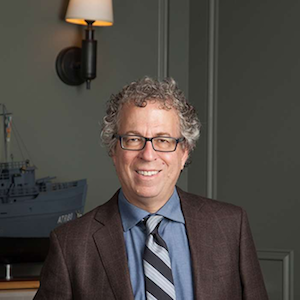
Robert Citino, PhD
Robert is The National WWII Museum’s Samuel Zemurray Stone Senior Historian. He is an award-winning military historian and scholar who has published 10 books, including The Wehrmacht Retreats: Fighting a Lost War, 1943; Death of the Wehrmacht: The German Campaigns of 1942; and The German Way of War: From the Thirty Years' War to the Third Reich as well as numerous articles covering World War II and 20th-century military history. He speaks widely and contributes regularly to general readership magazines such as World War II.
Dr. Citino enjoys close ties with the US military establishment, and taught one year at the US Military Academy at West Point and two years at the US Army War College. He also was Professor of History at North Texas University, Lake Erie College, and Eastern Michigan University. He has won numerous teaching awards and was voted the #1 professor in the United States on ratemyprofessors.com in 2007.

Jason Dawsey, PhD
Jason Dawsey, PhD, is a Research Historian at The Institute for the Study of War and Democracy, where he researches the service records of WWII veterans and writes their biographies for family members. A native of Columbia, Mississippi, he received his PhD in 2013 from the University of Chicago and has taught at the University of Southern Mississippi and the University of Tennessee at Knoxville.

Volker Benkert, Assistant Professor
Volker Benkert is an Assistant Professor in the School of Historical, Philosophical and Religious Studies at Arizona State University. His research focuses on the impact of sudden regime change on biographies after both totalitarian regimes in 20th century Germany. He is the author Glückskinder der Einheit. Lebenswege der um 1970 in der DDR Geborenen (Berlin: CH. Links Verlag 2017). Benkert's new research project explores apologetic and redemptive narratives in recent German Film. He also serves as Director of Graduate Studies for the new Worl War ll Museum in New Orleans.
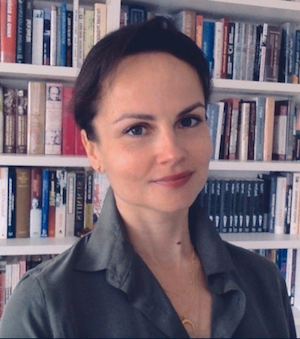
Olga Kucherenko
Olga Kucherenko is a specialist in the socio-cultural history of the Second World War with an interest in conflict-based propaganda, everyday life in wartime and allied relations. She received her PhD at the University of Cambridge and was later awarded a Research Fellowship at St. John's College, Cambridge. Olga has published extensively on the Soviet war effort and memory of the war in modern-day Russia.
She is the author of two monographs: Little Soldiers: How Soviet Children Went to War, 1941-1945 (Oxford University Press, 2011) and Soviet Street Children and the Second World War: Welfare and Social Control under Stalin (Bloomsbury, 2016). Olga also acted as an assistant editor for The Kremlin Letters: Stalin’s Wartime Correspondence with Churchill and Roosevelt by D. Reynolds and V. Pechatnov (Yale University Press, 2018).
Currently, Dr. Kucherenko is working on her third book about Anglo-Soviet public diplomacy in the 1940s. It is based on an array of primary sources from Russian and British Archives, as well as on the material gathered at Churchill College, Cambridge, where she was an Archives By-Fellow in 2019.
